The Clockwork Conjuror: Chapter 12

Miss Henderson sat opposite a rather severe looking middle aged woman wearing a dour frumpy dress. The woman’s hair was in a tight bun and not a single strand dared escape. She treated Miss Henderson to something she probably thought was a smile.

“So Miss Anderson,” she said. “I understand you would like to apply for a job as a maid at Cawdor House? I am Mrs Cartwright, the housekeeper here.”

“Very pleased to meet you Mrs Cartwright. I am indeed hoping for such a role,” said Miss Henderson, sounding nervous. “I have some letters of condemnation.”

Mrs Cartwright looked confused as Miss Henderson handed over the letters.

“Oh I see, recommendation,” Mrs Cartwright said. “Well your timing is most fortuitous as we have very recently and unexpectedly had a maid quit on us with no notice. In the middle of a meal, in fact.”

“Oh how unprofessional,” said Miss Henderson. “I could never leave an employer in the lunch.”

“You worked for a family in London, the Hennings at Northampton Row?” said Mrs Cartwright. “They seem very pleased with you from this letter. What size was the household?”

“Well,” said Miss Henderson, “I am a little under 6 feet…”

“I meant, how many serving staff,” said Mrs Cartwright.

“Oh there was only me,” said Miss Henderson. “Mr… Hennings was very interested in scientific things and he had a number of very reliable mechanical devices in the house. They helped save time in the chores. Which reminds me, there was also a part time mechanic for when the reliable mechanical devices broke down.”

A flicker of amusement shot across Mrs Cartwright’s face. 

“You may find yourself at home here then. Viscount Vernal has a similar interest. But, we have much more staff here, it will be a very different experience,” she said.

“Oh good,” said Miss Henderson, “I have so longed to work within a larger house, to be a part of something as grand as this magnificent building with its historic impediments and flying butt rests..”

“Tell me girl,” said Mrs Cartwright, “you’re a long way from your last job up here. Why did you come so far? Is there a man perhaps? Do you have an understanding with someone who lives here?”

“There was a gentleman friend,” said Miss Henderson. “And I hoped one day he might be more. But he wished to remain in London so I doubt we will ever be understood. I am here to help my sister, she’s expecting her third any day.”

“Child?” asked Mrs Cartwright.

“Husband,” said Miss Henderson. “He’s due back any day and will be discharged from the Navy. He’s developed a gammy heart and a dicky leg. Or is it the other way around? Anyway she’ll need some help with looking after him as well as all the little ones. She’s been better blessed with children than luck.”

“I see,” said Mrs Cartwright. “Well, your references are excellent, your manner is good and frankly we are desperate. We shall give you a month’s trial, starting tomorrow if you are available.”

“I shall see you first thing,” said Miss Henderson. “Thank you, I shan’t disappoint you!”

Castle Kitchen

The Clockwork Conjuror: Chapter 11

Sir John, Marie, Phlebotomous and the Clockwork Conjuror all sat in the Jennings’ Southampton Row residence. The Conjuror was obviously distressed and was sniffing and occasionally making a trumpet-like sound blowing his nose. Each time he did this Phlebotomous jumped.

The door opened and Miss Henderson stepped in with Detective Symonds.

“Jo… Detective Symonds,” introduced Miss Henderson. She did an awkward half curtsey and added. “I shall fetch some tea.”

“What’s the latest?” said Sir John.

“The rogue never came back,” said Detective Symonds. “I waited there hours after you left and then posted a constable overnight.”

“Then the trail has gone cold. It’s like you said, Phlebotomous,” said Sir John.

“‘Ironic indeed,” said Phlebotomous, “‘I shall take them to my donjon’. That’s what he said.

“His…dungeon?” said Detective Symonds.

“His chateau… castle,” said Marie. “It’s an old French word.”

“Then the trail may not be cold,” said Detective Symonds, “because I think I know where that is. I found out that the warehouse where Phlebotomous was being kept was rented by one Viscount Victor Vernal. When I showed the owner the picture the automaton drew…”

There was a loud trumpet noise from the Conjuror. Phlebotomous jumped.

“…he recognised it as the Viscount. Furthermore, I found that he was listed as a known associate of Lord Anglestone, who you recall, led Draco Viridis.”

“I could hardly forget,” said Sir John. “Then we have our man.” 

“There are… complications,” said Detective Symonds. “Cawdor House is the building that is probably his… donjon. That is the family house, and is in Northumberland. I have no jurisdiction there. And… I also have no crime to arrest him for.”

“He kidnapped Phlebotomous,” said Sir John, “and the automata.”

There was another loud trumpeting sound, not unlike an elephant.

“Indeed,” said Detective Symonds. “But none of those… people… are seen as such by the law, on account of being dead. All I can arrest him for is possession of stolen goods. And the Metropolitan Police won’t let me travel that far for that.”

“That’s criminal!” cried the Conjuror.

“Sadly,” said Detective Symonds, “it’s not.”

“This changes nothing,” said Sir John. “We’ll head up at once.”

Mon chère,” said Marie. “I understand how you feel, but we need to be a bit patient here. This man will be very powerful in his own domain. We won’t have any support there.”

“We have our wits,” said Sir John, “and your skills and Phlebotomous… er …”

He was interrupted by Miss Henderson coming in with a tray of tea.

“I shall start the packing at once,” she said, putting the tray down. She cracked her knuckles and left.

“And Miss Henderson,” said Sir John.

“I don’t think it’s wise to take Fel… Miss Henderson,” said Detective Symonds. “There may be grave danger, unknown risks and the possibility of deadly violence.”

The maid stuck her head round the door.

“Mr Bosch, may I use the knife sharpening device on my katana?” she asked.

“I have no doubt there will be,” said Sir John. “Especially for Viscount Vernal.”

‘I shall take them to my donjon

The Clockwork Conjuror: Chapter 10

There was a commotion outside the door, but the Clockwork Conjuror was silent. This was partly because he was trying to listen attentively to what was happening, and partly because he’d been gagged and strapped to a chair. Finally, the commotion resolved into some voices followed by a loud slamming sound against the door. An angry looking woman in a maid’s uniform burst in.

“We should probably proceed with a bit more caution,” said Sir John from outside the room before stepping in the room. He was followed by a man the Conjuror recognised from the puppet’s drawing.

“Good God! What happened man?” said Sir John on seeing the Conjuror. 

The Conjuror rolled his eyes and tried to indicate the gag. The maid came over and took it off and began untying him.

“I have the strangest sense of day jar view,” said the maid, “I’m Miss Henderson by the way.”

“Charmed to meet you,” said the Conjuror, “I’m David Bumblewit, Clockwork Conjuror extraordinaire.”

“Oh!” said Phlebotomous “No wonder I couldn’t find you in Debretts, I didn’t realise you used a stage name.”

“What’s happened here?” repeated Sir John.

“I, er, you really didn’t realise Clockwork Conjuror was a stage name?” said the Conjuror.

“No, or that your mechanisms were really just spirits summoned from the nether realms,” said Phlebotomous. “I’m starting to wonder if we can trust anything you say.”

He crossed his arms and tried to look stern. Miss Henderson had a small coughing fit.

“He came for them, for my little guys,” said the Conjuror, deciding to direct his attention to Sir John, who seemed a little saner. “The man in the drawing. They trashed the place.”

Sir John looked around the room surveying the general demeanour. He looked a little puzzled, as if he couldn’t see any difference.

“They?” said Sir John, “The man  had help?”

“He had henchmen,” said the Conjuror.

“Henchmen,” said Miss Henderson. She cracked her knuckles and licked her lips. The Conjuror found it a little disconcerting.

“He held Phlebotomous here captive as well,” said Sir John. “He had some dastardly scheme to extract magic from Phlebotomous and use it himself.”

“Did he succeed?” said the Conjuror, feeling worried now.

“No,” said Phlebotomous. “The wiring of his device was all wrong, it needed much more power than he had, and I’m not even sure what he was going to attempt was possible.”

“So, his machine broke down?” said the Conjuror.

“He didn’t even start it,” said Phlebotomous. “Once I mentioned that your act was phoney, he lost interest and left.”

“Phoney?” said the Conjuror.

“Yes,” said Phlebotomous, “passing off common and garden spirits as machines.”

“You… you told him they were magical?” said the Conjuror.

“Well it was ironic,” said Phlebotomous.

The Conjuror was utterly perplexed.

“What will I do,” he said, “those little guys, if he takes their magic away, they’ll die won’t they?”

“Mr Bumblewit, don’t worry”, said Sir John. “We are experts in such mysteries. We can help.”

The Conjuror looked at the maid, the sulking vampire and the posh gent.

“My poor guys,” he said.

Poor little guys

The Clockwork Conjuror: Chapter 9

There was a commotion outside the door, but Phlebotomous was silent. This was partly because he was trying to listen attentively to what was happening, and partly because he’d been gagged and strapped to a chair. Finally, the commotion resolved into some voices. They seemed to be trying to whisper and failing badly.

“Are you sure this is it?” said a man.

“Yes,” said a woman with a Scottish accent, “I could find that combination of scents if it was on the moon.”

“We’d better take the advantage of surprise,” said another man, “stand back while I…”

The door burst open, and Miss Henderson and Morag fell into the room.

“..knock the door down,” said Detective Symmonds. “Fel…Miss Henderson, that was very reckless.”

“He’s my friend too,” said the maid. “Look there he is.”

“Wait, it may be dangerous!” called out Sir John.

“It certainly will be for the gent who did this,” said Miss Henderson.

She arrived in front of Phlebotomous.

“Mr Bosch, are you all right?” she said.

“Hr…ngh…hnn…hrr,” said Phlebotomous.

“Oh right,” said Miss Henderson and removed the gag.

“Yes very well,” said Phlebotomous. “But how did you find me?”

“We, er…” started Miss Henderson.

“I could follow your… scent… from the theatre,” said Morag. “It’s quite… unique.”

“Personal hygiene is very important,” said Phlebotomous, “especially when you’re several hundred years old and dead.”

Sir John and Detective Symmonds came over. Sir John started looking at the machine next to Phlebotomous. He stared at it curiously for a while before jumping backwards.

“Good Lord,” he said, “Is this what I think it is?”

“Is that a rhetorical question?,” said Phlebotomous. “People keep asking me questions as if I could read their thoughts.”

“Isn’t that something people like you can do?” said Detective Symonds.

“Inventors?” said Phlebotomous. “Not usually.”

“It’s a machine designed to extract magical power from something,” said Sir John. “Thank heavens we got here in time.”

“It won’t work,” said Phlebotomous,” I did explain it to the man, but he didn’t seem to listen.”

“Was this the chap that abducted you?” said Detective Symonds, holding the picture that Danny the automaton had drawn.

“Yes!” said Phlebotomous. “He said he used to be a member of Draco Viridis. He remembered me from the church.”

“I wondered when we’d cross paths with them again,” said Sir John, “Let’s get you out of here, before he gets back.”.

“Actually, I don’t think he is coming back,” said Phlebotomous. “He seemed to lose interest in me after I mentioned the haunted puppets.”

“The Clockwork Conjurors puppets?” said Sir John.

“Yes, what a disappointment to discover they were just a bunch of spirits,” said Phlebotomous and sighed.

“So, he lost interest in you when he found out that they were magical creatures?” said Sir John.

“Yes,” said Phlebotomous. “He said ‘ironic indeed’ and then left in a hurry.”

Sir John and Detective Symmonds looked at each other.

“We have to check on the Conjuror,” said Sir John.

a machine designed to extract magical power

The Clockwork Conjuror: Chapter 6

The backstage room was small, gloomy and had an odour that somehow suggested damp, mould and tears. The Clockwork Conjuror sat in front of a mirror, whistling a melody that had no apparent key and scraping face paint off by the trowel-load. There was a knock at the door.

“Come in,” he said cheerily.

The door opened and Sir John and Marie walked in. 

“Oh hello,” said the Conjuror, looking a little surprised. “You made it to the show then?”

“Mr… Conjuror,” said Sir John, “you haven’t been entirely honest with us, have you?”

The Conjuror dropped his head a little.

“Well I may have exaggerated ticket sales a little,” he said.

“No,” said Sir John, “I mean about your… troupe.”

He gestured at the puppets and noticed that all their heads were turned to stare at Marie. He couldn’t remember if they had been like that when he came in.

“I’m not sure I follow you,” said the Conjuror, nervously.

“Boss,” said one of the puppets,” I think the jig is up. That dame there, she has some hocus-pocus stuff.”

“She is a witch!” said Sir John, proudly.

“She seems perfectly nice to me,” said the Conjuror, taken aback. “Nice to meet you, by the way!”

Enchante,” said Marie. “Maybe you explain about this jig.”

The Conjuror sighed and began his tale.

“Well, truth be told, as well as being a mediocre magician, unfunny comedian and tuneless troubadour, seems I’m not a very successful puppeteer either. Of course, I figure this out after I’ve spent all my savings on a fine set of puppets. So, desperate and at rock bottom, I do something rash.”

Sir John looked around and tried to imagine what rock bottom would look like for the Conjuror.

“Go on,” said Marie, not unkindly.

“You know that magicians are supposed to summon spirits. Well of course, that’s just a story to sell the magic. Or so I thought. I wondered if there was some truth in the tale. So I went looking and I found it: A grimmer.”

“Grimoire?” said Sir John.

“Exactly,” said the conjuror. “So I arrange all these puppets in a circle, and I follow the instructions, and, lo and behold, they speak, they are alive.”

Sir John inhaled sharply.

“So these are… puppets possessed by… spirits?” he said.

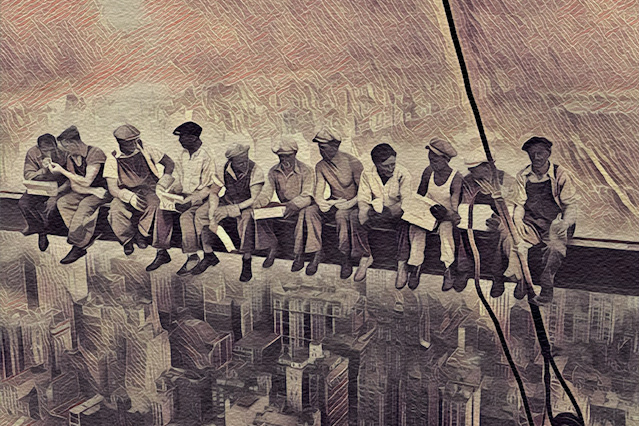
“Not exactly,” said the puppet that had spoken before. “See, the same time the boss is doing his thing, we’re all sitting on a girder, high in the sky, eating lunch.”

“In… heaven?” said Sir John.

“Park Row Building, New York. We’re a construction crew, see? Well we were. Turns out that girder wasn’t attached so well. We all fell down. I can still recall it, seeing the ground rushing toward me, my life passing in front of me and then… BAM. We wake up in Birmingham, England.”

“Good God!” said Sir John.

“It makes sense mon cher,” said Marie. “It’s like you say about electricity, it takes the lazy path. Magic is the same. Why bother fetching spirits from the otherworld when you have 23 souls already here.”

“So here we are,” said the puppet. “We may be small puppets that are dead inside, but hey, we’re in showbusiness!”

“Ta-da!’ said the puppets at once.

Lunch atop a Skyscraper

WH Rugbinder: A Biography

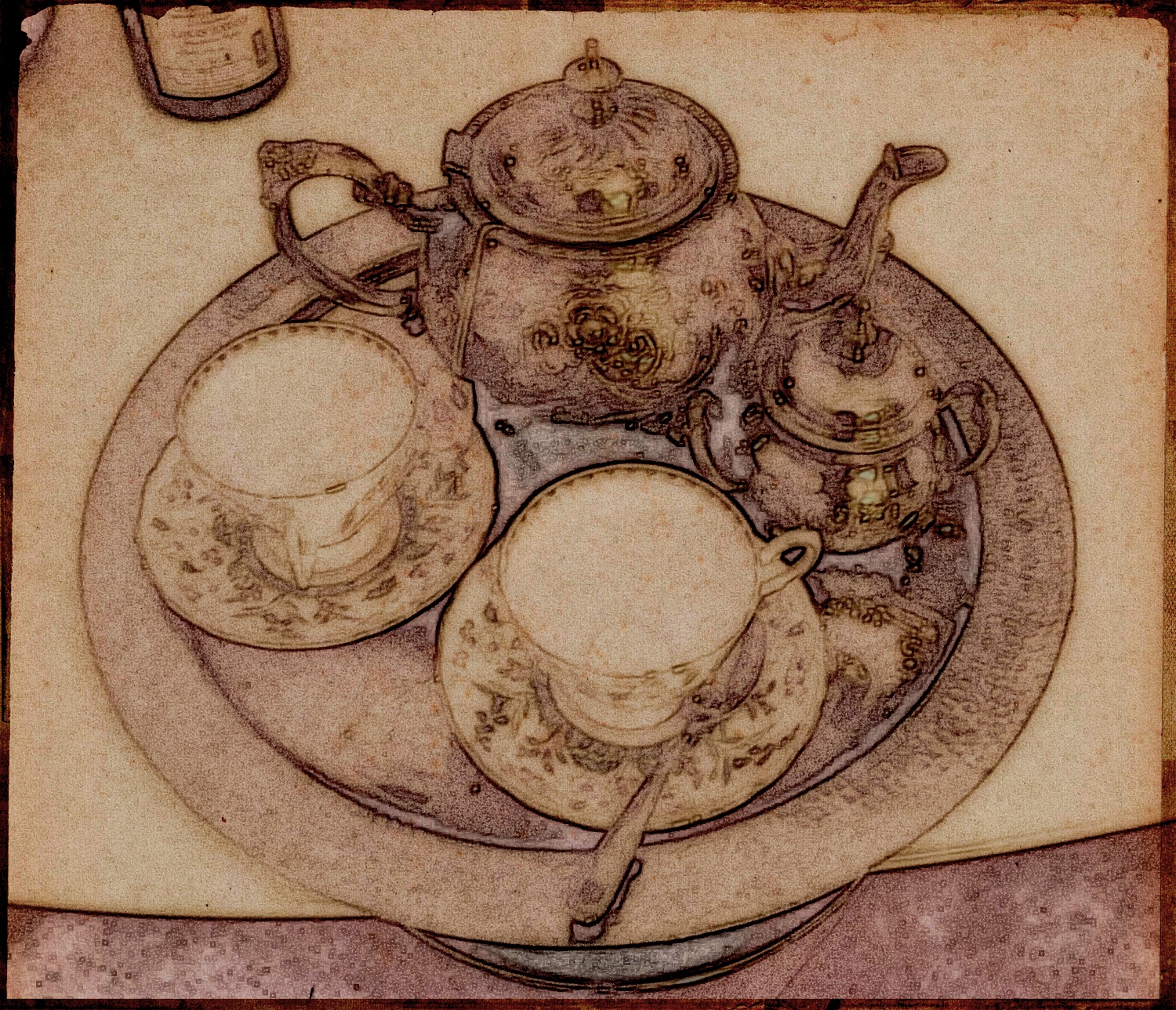
Tea Fiend“Can there be any greater depravity?” WH Rugbinder

Many remember Victorian writer Wilberforce Horacio Rugbinder for his classic text on contemporary mores, The Multitudinous Vile Sins of the Working Class That Will Cause Them to Burn In Hell. At the time it was considered a well-meaning and insightful account of the slum life in Victorian London, although by modern readers it is regarded as a little prudish and judgemental. In particular, the forthright and voluminous chapters condemning the practice of having a day off from work are seen as contrary to modern thinking. However, few people know that WH Rugbinder published other works on moral topics too. This little article hopes to correct that situation.

WH Rugbinder was born to a middle-class family in the borough of Ealing. After an unremarkable schooling where he made few friends, he entered a seminary in the hope of becoming a priest. Unfortunately, this was not to be as Rugbinder clashed with his teachers on a number of theological points. In particular, they objected to his assertion that not just the priesthood but the laity, should be celibate. Leaving the church unfulfilled, he spent time in London to understand first hand the problems caused by sinning. His first attempt at a book, Diary of a Tea Fiend, relates in a semi-fictious way the descent into debauched existence that befalls a young fellow who becomes obsessed with tea drinking. After losing, in short succession, his wife, his livelihood, and the good opinion of his family, he ends up drowning in a bath filled with Oolong. This remarkable book was self published at no small cost and sold almost ten copies.

Rugbinder then went on to confront another beverage related evil in the form of coffee. This time he took a wider view and interviewed a multitude of “coffee pot heads” as he called them. His analysis and conclusions were again self published in a luxurious leather-bound book with gold leafed lettering on the cover. Unfortunately, this was to be a terrible error as the cost of each copy of The Tyrannical Evil of the Foul Plant Known as Coffee, its Effects on Diverse Patrons of Coffee Shops in London, and the Inevitable Decline of Morality that Accompanies Drinking It was to far outweigh the cover price and so nearly bankrupted Rugbinder.

It was this experience of extreme poverty that was to force Rugbinder to live in the poorest parts of London and to lead to his final tome, which was his most popular in terms of sales. Unfortunately word of the contents reached his neighbours and Rugbinder was forced to flee London. His final attempt at a book, The Comfort of Solitude was uncompleted. He left behind no family, children, or indeed, friends.

***

With thanks to Breaking the Glass Slipper for inspirational twitter chat…

And to Angela McFall for the lovely tea service

Letter to the Editor

Dear Sir/Madam

I am, I believe, a tolerant man and as a man of the cloth, it is well that I should be. However I saw something last week in your Benthic Times which created a profound sense of unease within my breast and which forced me to write to you.

My young nephew Silas has of late been staying at the vicarage whilst his mother recovers from a bout of bilious ague. He is, like many young men, impressionable and given to romantic notion, although he is a good sort, dedicating a part of each day helping out at Mrs Ginnidraws School for Fallen Ladies. Of an evening he will often be seen, though, reading the sort of sensational literature that your magazine also contains. I happened to glance last week and saw something so mortifying that I was forced to extract the magazine from his hand. For there, in plain view, was a plant being presented as Aconite which was clearly another species. I could not allow him to be exposed to such shoddy botany. It seemed as if the creator of the image had looked in their locale for a plant that was similar and attempted to pass off a clear example of Gluteus Maximus – or Ruddy Whackweed – as Aconite.

As a keen yet amateur botanist I recognised not only the plant, but also the locale it must have come from. You see, Ruddy Whackweed is not to be found in Cornwall or even the British Isles, but is a native of Greece. I recognised it from my walking tour of the Dodecanese last spring. Well sir, madam, I present below some of my botanical notes to educate you in the hope that you don’t find yourself using the wrong species again.

4This species is Flora Extraterrestralis or Mouldy Goat Hair. It can be used to prepare a poultice for foxy.

1This is Stella Inconsequentia known as Sticky Chive or Stinky Chive. It is used primarily in salads and is believed by primitive peoples to ward off people with a squint.
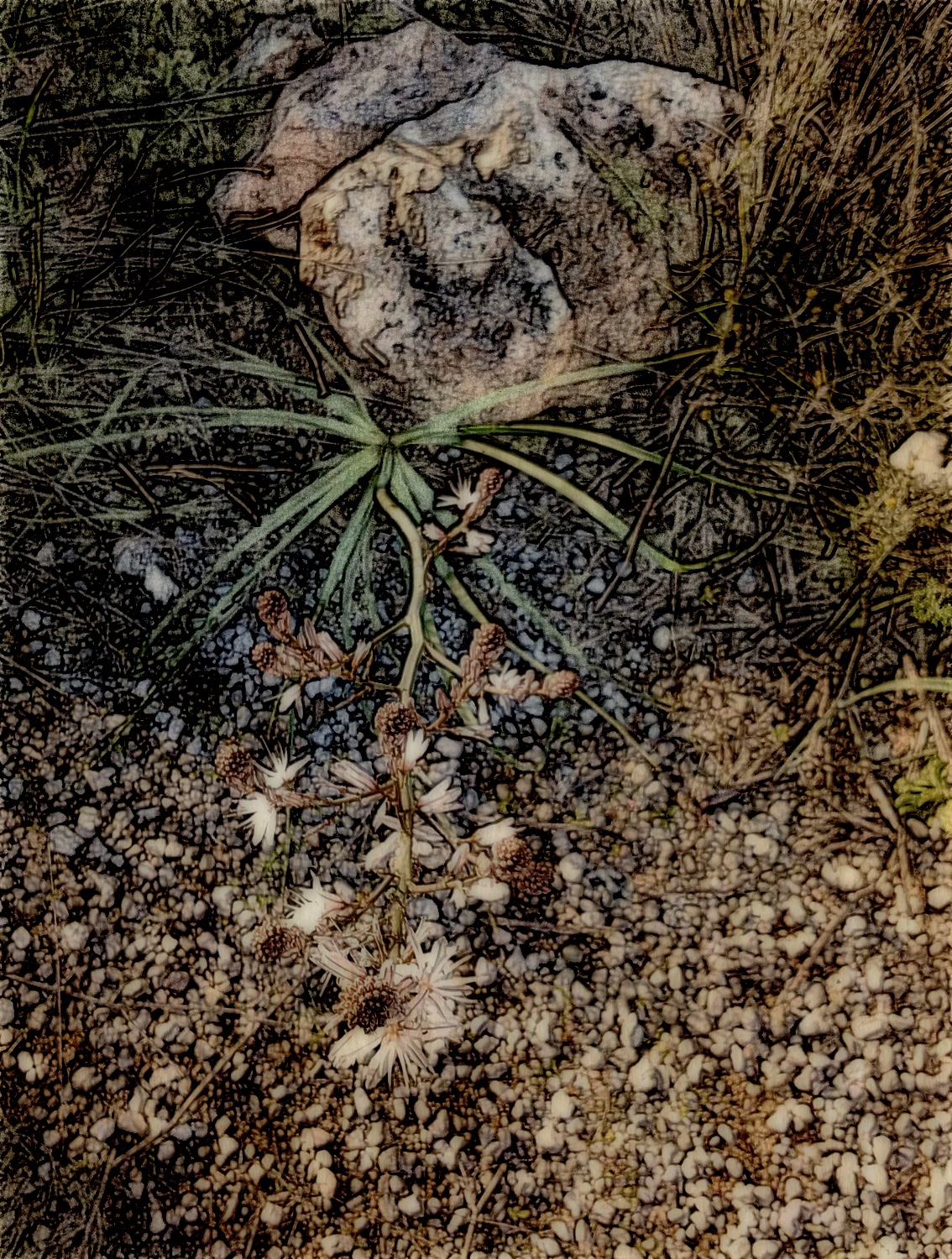
7This is known as Stultus Flos or Exploding Jenny. It is poisonous to rodents between 1 and 1 half and 2 inches long.
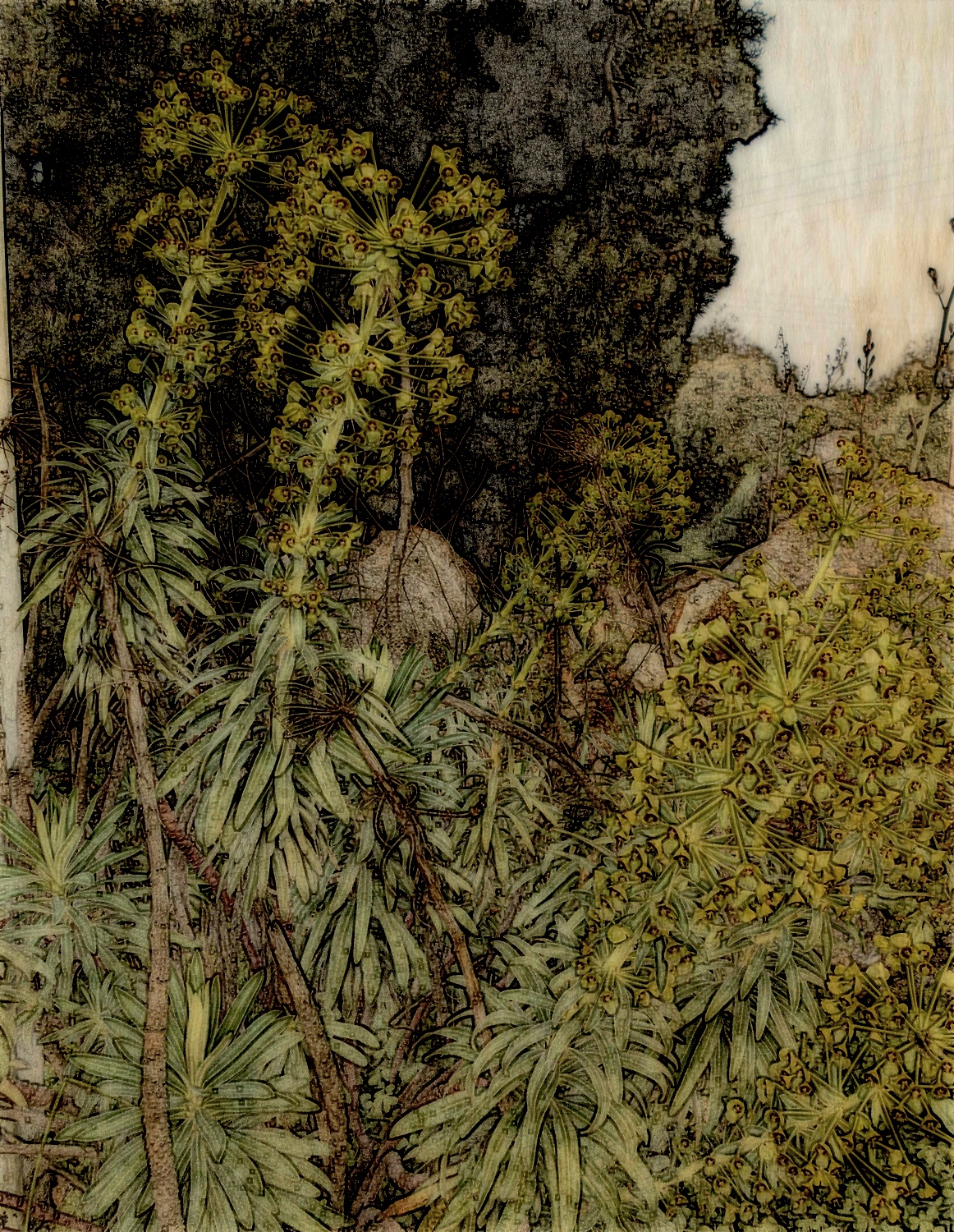
8This plant is Pigor Scriptor or Incompetent Orchid. It has no known use.
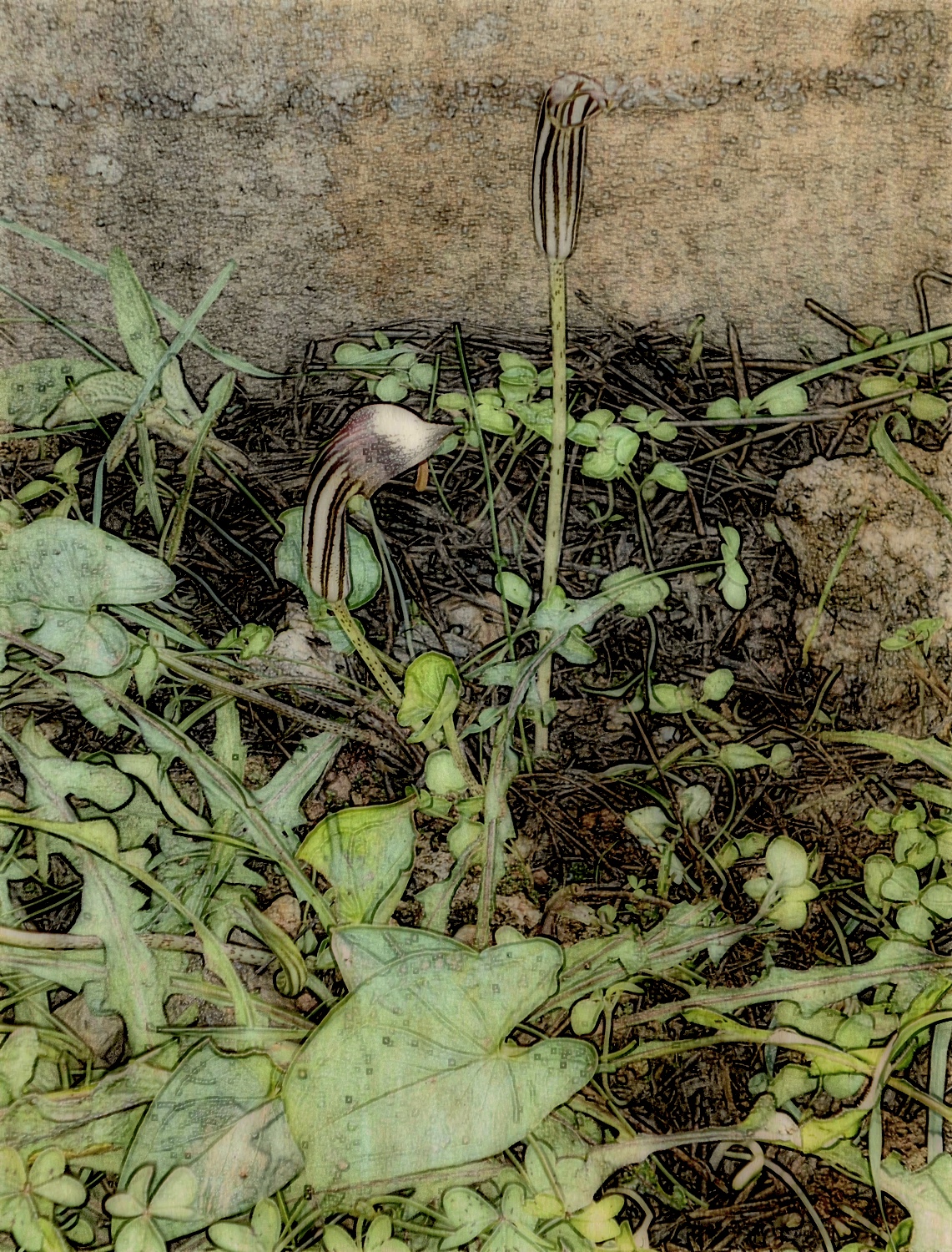
10This is Disculpi Tardi or  Scrote Violet. It is a powerful sedative or stimulant depending on wind direction.

I trust this little guide to the fauna of the Greek Isles will prevent a similar instance of botanic mislabelling.

Yours

Rev Johan Stiltburger

Cringingham

Somerset