Skeletons in the Booth

bird-skeleton“Entertainment in the Days Before Television” 

Dear Reader

We were recently intrigued by an interesting tidbit we found whilst researching Joy Mallum’s reading material. It was in the restricted section of the library, in a book which also had some information about a rare bit of magic. But our interest in this instance was drawn to something called, rather poetically, the Skeleton Army.

These vile hordes, were, it seems, the sworn enemies of their near namesake, the Salvation Army. Appalled at the notion of tee-totalism, they organised counter demonstrations where they subverted the Army’s songs, shouted foul slogans, and even engaged in violent opposition to the Army. After some unfortunate fatalities their activities petered out, but one can’t help thinking they should appear in some fictionalised form somewhere. Who could write such a thing…

The picture we have chosen to illustrate this little nugget is a skeleton of a bird from the marvellous Booth Museum in Hove. The most tenuous link is the skeleton of one army and the founder, Booth, of the other. We understand neither are related.

Should you ever find yourselves in the Brighton and Hove area (and many people do find themselves in this area) then we recommend a visit. The collection of preserved birds, insects, skeletons and more curios is enough to entertain adults and children with strong stomachs for a couple of hours. One may then find a local hostelry to repair to and, in defiance of the other Booth, restore one’s spirits with a stiff drink.


It Was A Dark and Stormy Night

Gentle Reader

I feel that we cannot simply pen a line such as “the maid screamed” (on which our present chapter ends) without explaining a little of the literary heritage of this line. It is, in fact, a deliberate quotation from a childhood favourite. The original work is by one Charles Shultz, ventriloquised via a well known canine character, who started a novelette in the following manner:

“It was a dark and stormy night. Suddenly, a shot rang out! A door slammed. The maid screamed.”

This is in itself a literary nod to the famous, or possibly, infamous opening lines to the novel Paul Clifford:

It was a dark and stormy night; the rain fell in torrents—except at occasional intervals, when it was checked by a violent gust of wind which swept up the streets (for it is in London that our scene lies), rattling along the housetops, and fiercely agitating the scanty flame of the lamps that struggled against the darkness.”

This is the work of one Edward Bulwer-Lytton, who should be very comfortable in these pages, being as he was a Victorian Novelist with a taste for the occult.

edward_bulwer_lyttonEdward Bulwer-Lytton, not Snoopy the Dog

In fact, this gentleman led a most interesting life, working as politician denounced by his own wife at the hustings, being offered (and refusing) the Greek throne and gifting us the phrase “the pen is mightier than the sword”.

Perhaps it is one of those ironies of fate that leads him to be remembered most of all for the clunky and meandering sentence above. He gives his name to an annual competition in its honour whereby literary wags attempt to parody the style of the thing. Those who find themselves at a loss of what to do this Sunday evening may care to peruse it.

The Bulwer-Lytton Fiction Contest


The Staircase Mystery

Following our recent transatlantic travel, the Benthic Times are a little airship-lagged and so our regular Friday post is appearing on Saturday. The ink in our well is a little dry as well, so I’m afraid we merely have this picture of a staircase from our pleasant stay at Hôtel St Jacques, Paris. We can wholeheartedly recommend this hotel for its location,  its staff, and for its collection of Victorian ephemera.

staircase-at-hotel-st-jacques-paris


Your Call is Important to Us

Extract from “Your Call is Important to Us: Towards a Socio-political Praxis of On-Hold Music by Dr Jeff Grunt.

It has been well documented in this treatise how poor cultural framing of “on-hold music” can induce cognitive dissonance in the intended audience. British users of Southern Rail’s helpline demonstrated this cross-wiring of outcome and intention quite clearly when 56% reported they were “quite distressed” or “very distressed” when hearing The Four Seasons by Vivaldi, apparently as it reminded them that British weather was more homogenous, located as it is in a generic “single season” paradigm of rain and wind.

What has been less well researched has been the kinetic-auditory impact of, for example, timbre and “note envelope” parameters. Anecdotally, a lower-quality under-developed timbre may induce a certain displeasure, but there has yet to be a wide-scale analysis of, for example, whether Beethoven’s Ninth is less likely to provoke negative-biased responses when played by a full orchestra rather than on a stylophone.

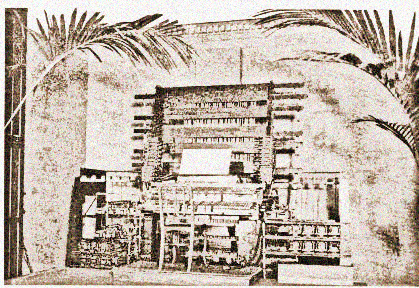
Teleharmonium1897_edited-1

Nevertheless, an early attempt at producing telephonic music may prove instructive, especially as to its demise. The “Telharmonium” (pictured above) was an early electronic instrument developed in the later Victorian era by a Thaddeus Cahil. Three versions were produced, the last weighing around 200 tons. The instrument itself would take up an entire room.  Thus, proving unwieldy to travel, the instrument was used primarily for telephone users to listen to music. However, despite the relative unavailability of recorded music at that time, the telharmonium was not a success. Notwithstanding the tremendous power consumption required, the fatal flaw seemed two-fold.

The first problem noted was that the basic sound, a sine wave, was “pure and clear”. Although there were options to modify this source, I contend that this purity, this perfection, may well have contrived to create displeasure. The sounds may have been unearthly or ethereal to the listener used to the more visceral sounds of a street urchin playing a violin. Secondly, there are also reports of cross-talk incidents, where conversations were interrupted by ghostly music. In all, by the early part of the 20th century, the instrument had lost favour and fell into disuse.

We can, I think, conclude clearly that here we have less a sociological issue than a timbral one. I shall be exploring this more thoroughly in the next chapter “Windpipes and their Role in Helpdesk Worker Abuse.”

(Dr Grunt is Lecture of Muzack at UMIST and is also author of “Elevation: The Use of Religious Music in Lifts” and “Liminal Exotica: Bossa Nova Rhythms and Hotel Lobbies”)


Visit Manchester!

COME TO VICTORIAN MANCHESTER!

CLICK ON THE PICTURES TO SEE THE SIGHTS!!

Visit_Manx_Guide COLLECT YOUR TOURIST GUIDE!!

ACQUIRE A CITY MAP!! Vist_Manx_Map

Visit_Manx_Balloon TAKE A BALLOON RIDE!!!

GO TO THE PICTURES !! Visit_Manx_Camera


VICTORIAN MANCHESTER HAS SOMETHING FOR EVERYONE!!

A MODERN CITY WHOSE INDUSTRIAL INFLUENCE SPREADS ACROSS THE WORLD


GRATITUDE BEYOND MEASURE TO THE MARVELLOUS GRAPHICS FAIRY FOR ALL THE PRETTY PICTURES

The Second Salem Witch Trials

by Professor Marmaduke Herringbone-Stove

There has been much interest recently in these fair shores on the topic of the diabolical and malevolent practice of mesmerism.

I hear you gasp at my mention of the word, but as an expert I hold no fear of these devious practices. I have spent many years studying this foul perversion of natural forces. I understand how it operates, how it can control the mind of a more fragile being, how it can destroy a man. But I have no wish now to expand on this topic. I have written elsewhere on it and frequently give speeches and lectures.

No, today I wish to keep you abreast of events on the other side of the Atlantic Ocean, namely in America. It has come to my attention that there has been a  legal trial most recently near the famed city of Salem. A trial that was called by the newspapers the “Second Salem Witch Trials” although it features no witch. Indeed the indicted, one Daniel H Spofford, was accused of none other than mesmerism!

SpoffordDaniel H Spofford,  Alleged Mesmerist

Let me acquaint you of the facts as they appear to me. This seems a tragic tale indeed, a “fall from grace” if you will. For Mr Spofford was very much engaged with the brilliant if theoretically misguided Mary Baker Eddy and her Christian Science movement. Clearly, there he was exposed to the powers and practice that Mrs Eddy and others have called “animal magnetism”. But these powers have a dark side too. A power that Mrs Eddy has written about in a chapter of her famed “Science and Health” book. That she has called Malignant Animal Magnetism, or more simply, mindcrime.

Daniel H Spofford, for all his years of service to Mrs Eddy, must have been seduced by these dark powers. It was said in court that he

“is a mesmerist, and practices the art of mesmermism, and by his said art and the power of his mind influences and controls the minds and bodies of other persons, and uses his said power and art for the purposes of injuring the persons and property and social relations of others and does by said means so injure them”

In particular, the unfortunate Lucretia Brown was a target of his terrible powers, being made invalided by this devious soul Spofford. Yes, it is true she had received the injury decades before and yes, Spofford had fallen out with Mrs Eddy. It is also alleged that Mrs Eddy’s lawyers assisted in drawing up the complaint, but surely this is merely the act of a benevolent friend.

In any account, the law proved once again what an ass it can be. The case was thrown out by the Judge, who foolishly suggested the claim was vague, that no law had been broken and that the law would not be able to stop Mr Spofford if he did have the powers that Mrs Brown suggested he had. I say the law is an ass, but maybe there is another, more sinister reason why the case was rejected. My conjecture is this, Mr Spofford used his powers as a mesmerist…to mesmerise the judge!

Now surely we can see how powerful these mesmerists are and surely all good men and women should arm themselves against such mental meddling. The truth should be told, explained, and given to all mankind, that they may keep themselves safe

Professor Herringbone-Stove, Greater Manchester

(Professor Herringbone-Stove is available to deliver lectures to meetings attended by appropriate gentlefolk, birthdays for over 10s and weddings where liqour is not served.)

Please Note: The views expressed by contributors to The Benthic Times may not reflect the views of the editors or owners. Students of legal history are earnestly encouraged to study this document for an alternative perspective.

Cup of Brown Joy and the Silv’ry Tay

This very evening we shall be repairing to local hostelry The Yellow Book to hear the work of a young poet called Professor Elemental. I’m not sure which academic institute awarded him this title, so cannot speak on that point, but I have heard that he is a first rate wordsmith. Interestingly, there is a novelty element to his literature in that he has set his work to a sort of rhythmic drumming. This shall be interesting to observe although frankly I don’t think this sort of thing is likely to catch on. 

But thinking of great poetry set to music I was reminded of the famous poet William McGonagall whose own ode The Famous Tay Whale was  set to music.  Those unfamiliar with Mr McGonagall’s work are urged to seek it out forthwith. His use of language and masterful command of metre are truly breathtaking.

McGonagall

Of course famous though this work is, perhaps his greatest poem is The Tay Bridge Disaster. The opening and ending are included here to allow you, gentle Reader, to bask in wonder at the power of this work. So evocative and profound is this writing, it has been known to reduce men to tears.

Beautiful Railway Bridge of the Silv’ry Tay!
Alas! I am very sorry to say
That ninety lives have been taken away
On the last Sabbath day of 1879,
Which will be remember’d for a very long time.

¨¨¨¨¨¨¨¨¨¨¨¨¨¨¨¨¨¨¨¨¨

It must have been an awful sight,
To witness in the dusky moonlight,
While the Storm Fiend did laugh, and angry did bray,
Along the Railway Bridge of the Silv’ry Tay,
Oh! ill-fated Bridge of the Silv’ry Tay,
I must now conclude my lay
By telling the world fearlessly without the least dismay,
That your central girders would not have given way,
At least many sensible men do say,
Had they been supported on each side with buttresses,
At least many sensible men confesses,
For the stronger we our houses do build,
The less chance we have of being killed.

The Biophantascope

So a most pleasant “Steam Driven Quiz Night” at renowned Brighton hostelry The Yellow Book proved to be more than a little educational. We learnt about this chap: 

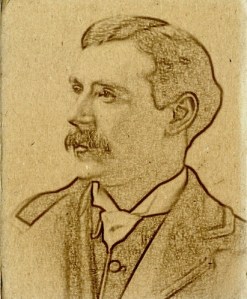
William Friese-Green

A Mr William Friese-Greene, latterly of these parts who was an inventor of early cinematographic devices. He was a little tardy in his inventions, but had a supreme talent at naming them. His early creation was a Biophantascope and later he made a chronophotographic camera.
 

A profilic inventor and a most excellent nomenclaturist, Mr Friese-Greene, we salute you.